.png)

A tast of what's to come
Shaking up conventions and bringing boldness, celebration, innovation, and craftsmanship back to the center of the table — that is the spirit of Ferdie.
Our ambition?
To bring art, banquets, and table culture back into contemporary life.
Our personal touch?
Elevating the ordinary. Celebrating the overlooked.
Thatsame intention is what drives us to create this space for encounters,conversations, and inspiration.
Awindow into what moves us, surprises us, and leaves us in awe.
Thestories we want to tell.
The encounters we love to spark.
The crafts we want to shine a light on.
The portraits we wish to draw.
The inspirations we want to share.
“LeSurtout” is an open window into our world.
An invitation.
Bienvenue chez Ferdie !
Eric & Colin Saint Chaffray - Founders of Ferdie Paris
The Story of Ferdie, Served Properly
Before exploring the many faces of craftsmanship, design, hospitality, luxury, and gastronomy, it only felt right that we be the first ones under the spotlight.
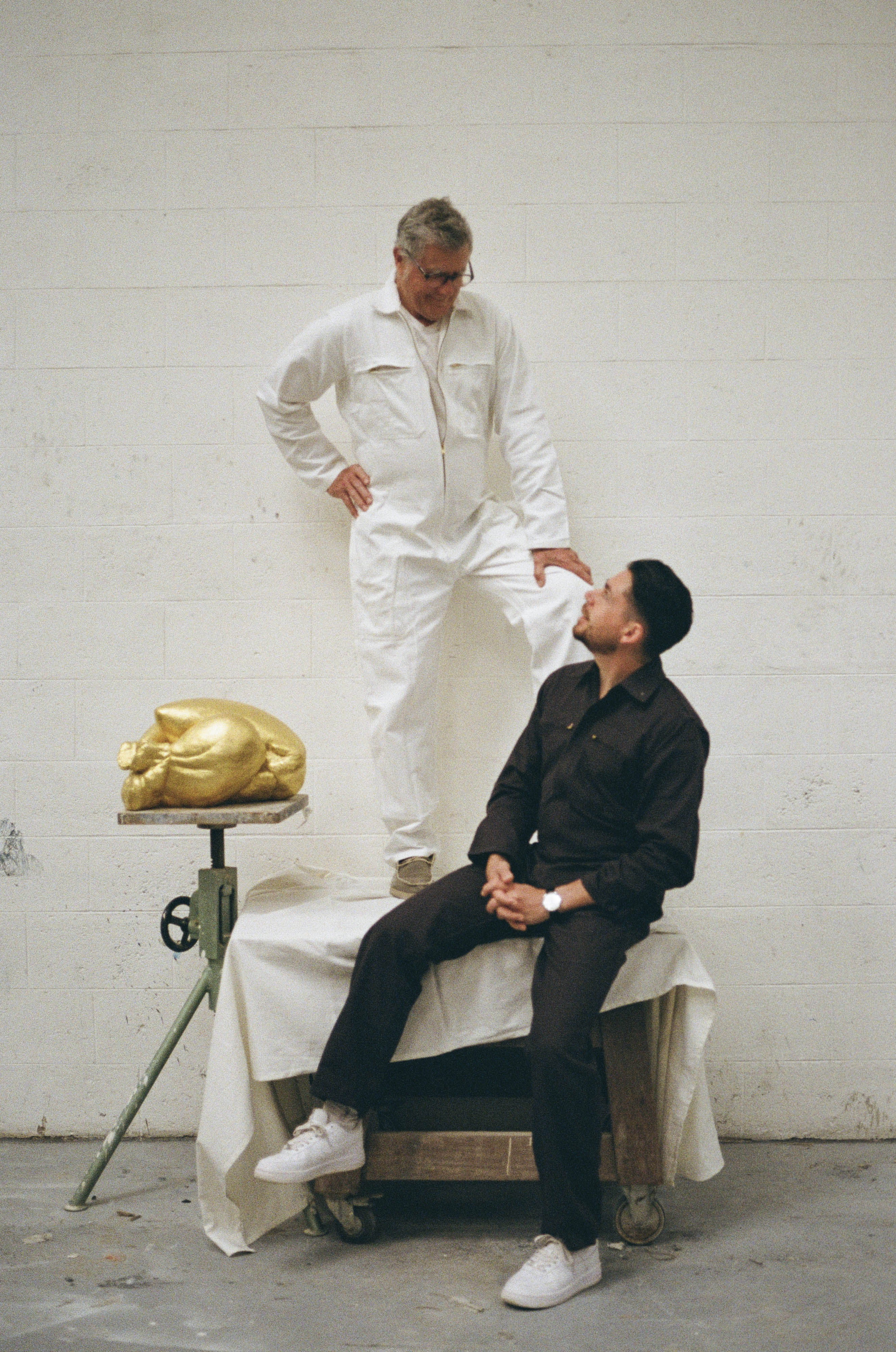
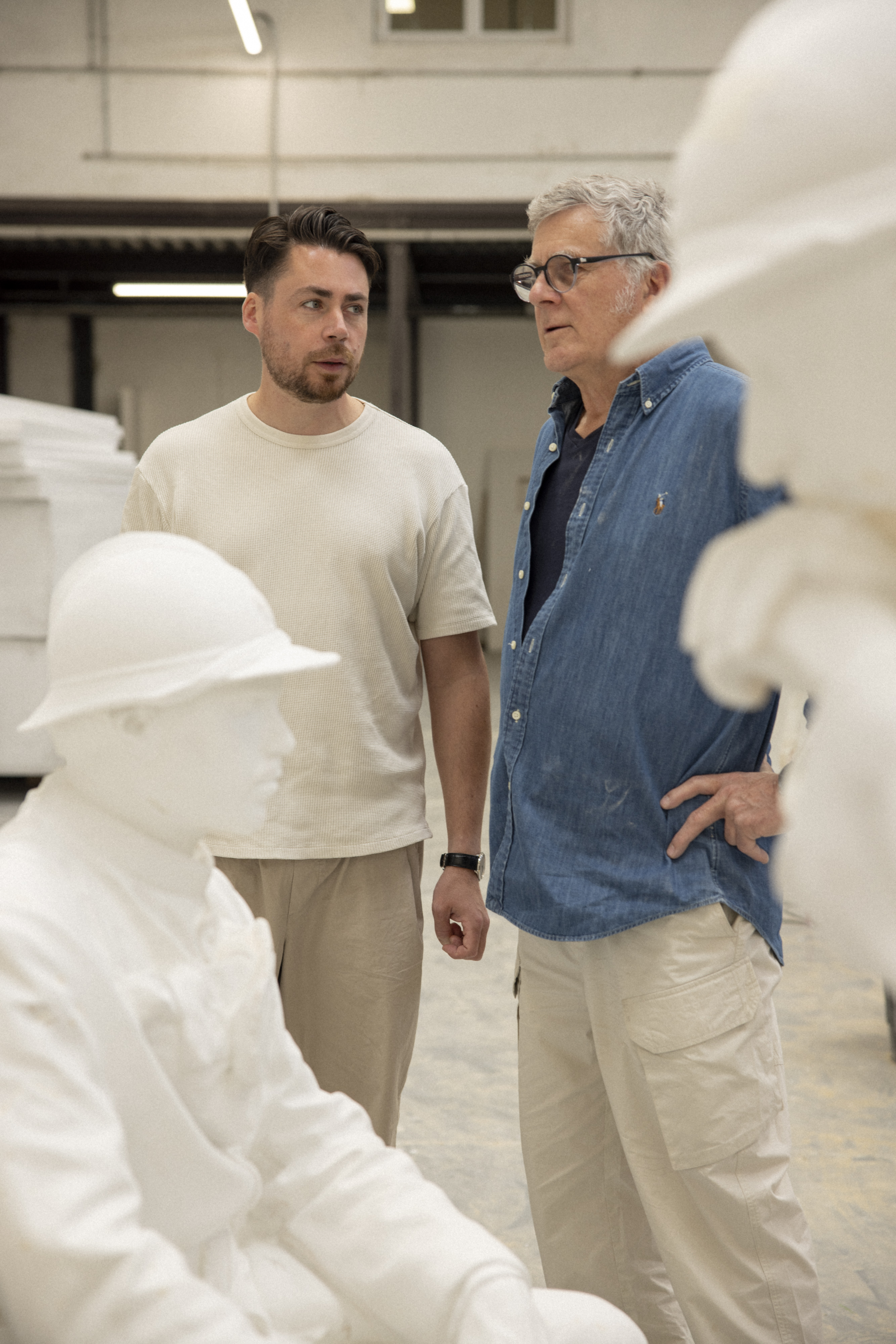
During a visit to their workshop just outside Paris, Eric and Colin Saint Chaffray —co-founders of Ferdie — sat down with us for a family portrait and a candid conversation, approached with as much humor as sincerity.
How was Ferdie born?
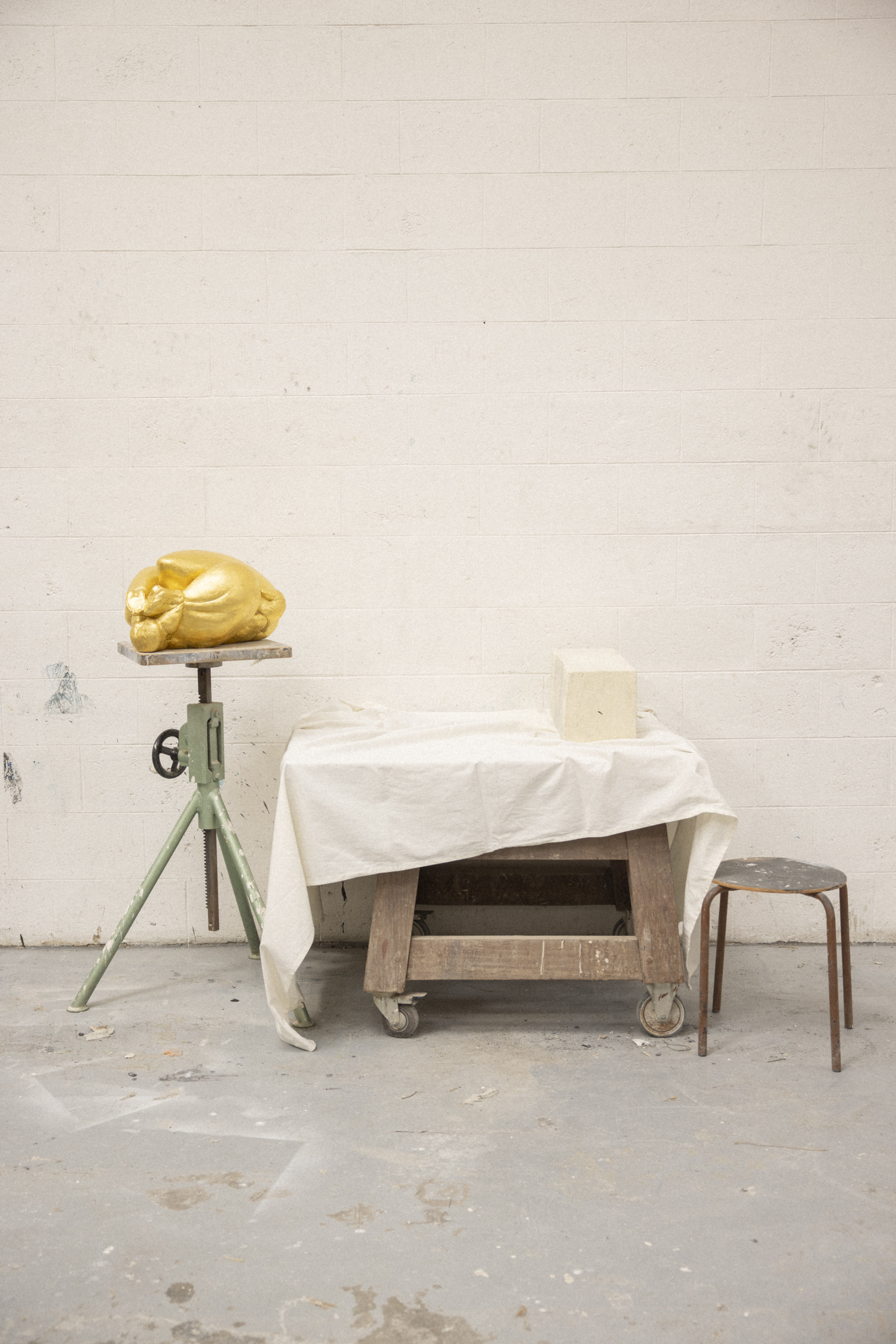
Eric : It all started with a chicken sculpture covered in gold leaf. But before that, you have to go back to the creation of Atelier Saint Chaffray.
I was working as a sculptor for the Grévin Museum. After 37 years, I felt I had gone full circle. At the same time, Colin was doing consulting workin one of those big La Défense towers and, frankly, he wasn’t exactly having fun either. Grévin had abandoned the idea of developing hyper-realistic sculpture outside the museum world, so we thought: well, let’s do it ourselves.We started by exhibiting a hyper-realistic sculpture of Colin at a trade fair.The life-size figure was leaning over a phone, half sitting on a table. People would actually speak to the sculpture and get annoyed when it didn’t answer.(Laughs) It became a real happening. And through that, we met a future client who later commissioned 300 realistic sculptures of enslaved people for The Aurora, a replica of one of the last slave ships to leave the port of Ouidah in Benin in 1860. We’ve just delivered them.
Colin : We quickly realized our clients needed much more than sculpture alone. So we created a global workshop capable of offering a full360° approach — scenography, interiors, 3D conception, carpentry, metalwork, painting…We expanded the spaces, brought in machines, recruited people with very rare skills, and trained many others ourselves. That’s how Saint Chaffray came to life.
Ferdie came later, in 2025… because of a roast chicken.
Because of a roast chicken?
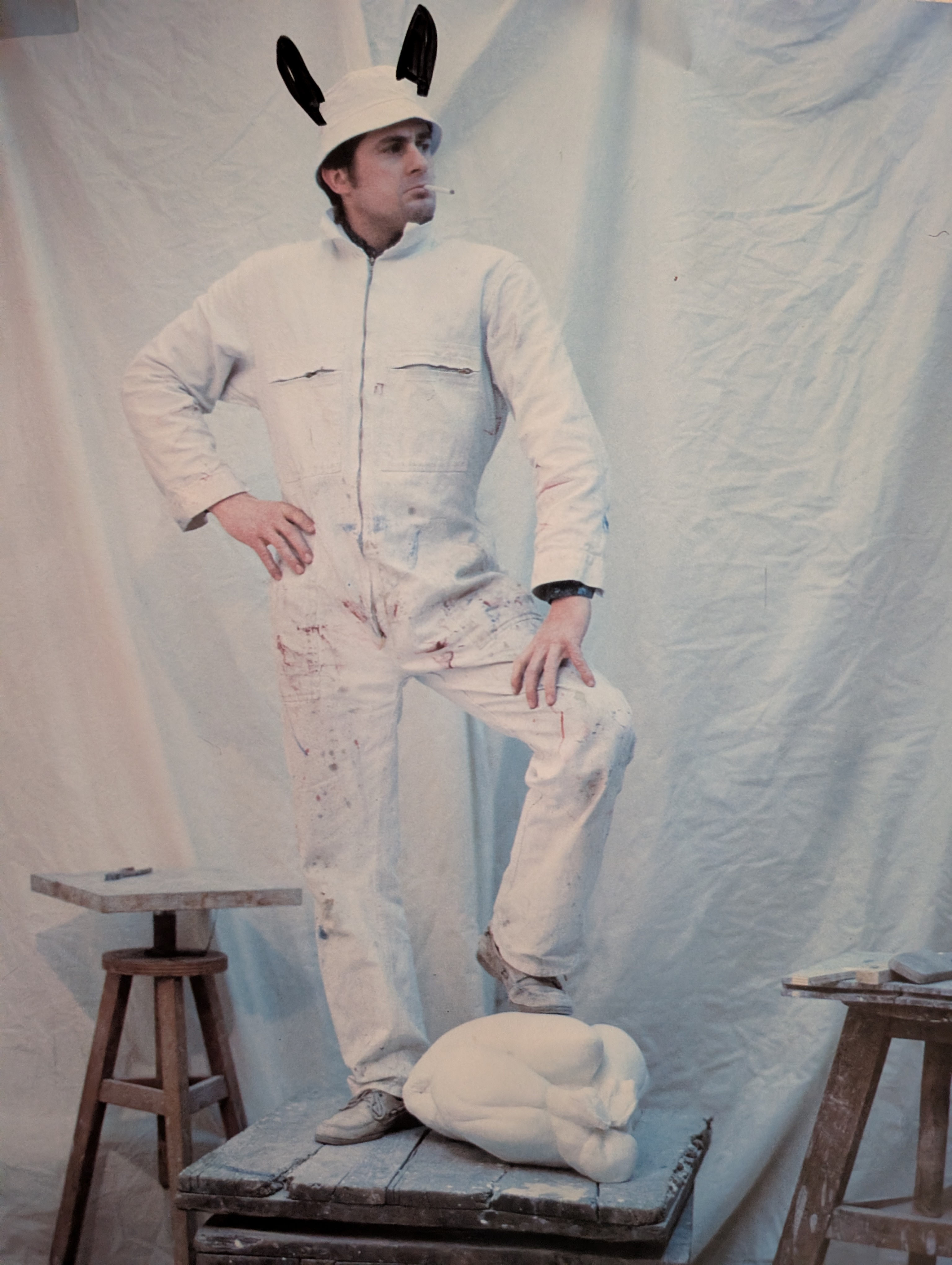
Eric : Yes. Originally, it was a personal sculpture criticizing consumer society. I sculpted a supermarket chicken sold naked in plastic wrapping. There were several versions displayed on pedestals, including one covered in gold leaf. One day, the chicken moved from the pedestal to the dining table. And it stayed there. Because suddenly, it made sense. That wasn’t its original purpose, but we quickly noticed how strongly people reacted to it whenever they came to the house. There’s something funny about it, almost grotesque — this large everyday chicken transformed by gold leaf. And it’s provocative too: presenting a trivial supermarket product as a precious artwork. But that tension interested me deeply — the contrast between something universally ordinary and something precious.
Colin : That’s when we realized we were onto something. But we never imagined these pieces on pedestals inside galleries. We saw them at the center of the table, the way we lived with them ourselves. That led to the creation of Ferdie — a brand designed to disrupt conventions through sculptural table pieces existing somewhere between art and design, tradition and modernity, elegance and extravagance.

Where does the name Ferdie come from?
Colin : It’s the nickname of my son, Ferdinand.
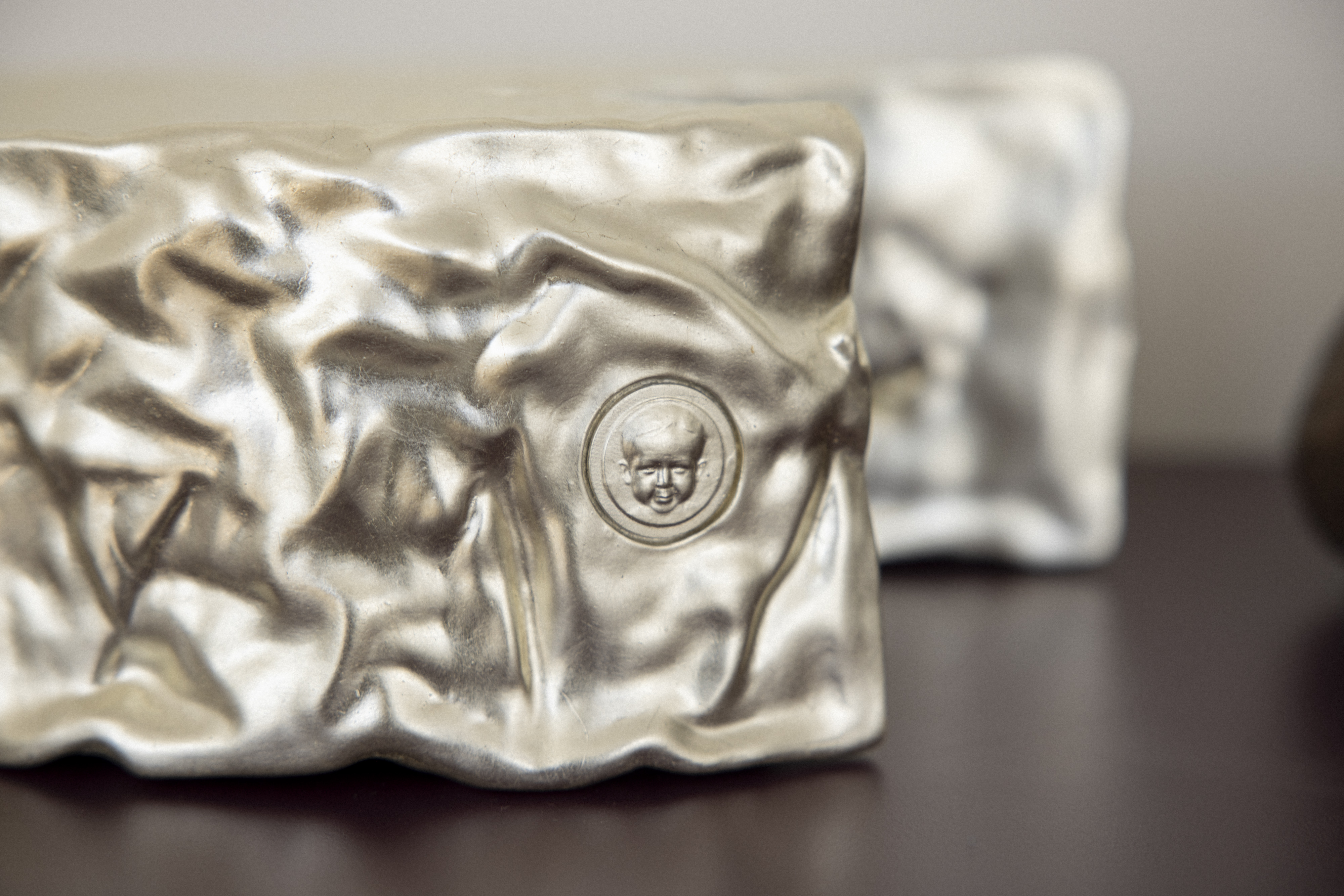
Since this is ultimately a story about family and transmission, it felt natural to include three generations in the project. His face, as a baby, actually appears one very piece in the collection. Eric — his grandfather — sculpted a medallion, almost like a large coin in bas-relief. We then scanned it in 3D to create miniature versions that are embedded into every Ferdie piece. Like a sculpted signature.
The collection quickly expanded into other food-related objects. Was that intentional from the start?
Eric : Yes, because the logic was always the centerpiece. Putting art back at the center of the table. There had to be a connection to food, to what happens during a meal. That’s exactly what historical French centerpieces were about: sculptural scenes referencing hunting, abundance, or what was about to arrive on the plates. Food was always the DNA of the project.
At first, we had made a huge list of objects —cameras, shoes… But I wanted to avoid representing things that were already beautiful, already luxurious, already desirable. It’s much more interesting to elevate something basic, something everyone can relate to. Chicken is probably the most consumed meat in the world. A walnut, a loaf of bread, a croissant, an egg — these are simple things. Camembert is deeply popular. You can pick up oyster shells on the beach. Well… the lobster perhaps drifts slightly away from our original philosophy.(Laughs) But while creating the pieces, we realized how powerful certain forms could become visually. That naturally led us toward shapes that remain universal and instantly recognizable. Sometimes the irreverence comes from scale itself. A giant croissant that has already been bitten into inevitably disrupts expectations. And it makes people smile.
If you had to explain the brand in the simplest possible way to a six-year-old child?
Colin : I’d explain it the same way I explain it to my son: We make sculptures shaped like chickens, walnuts, or croissants that we find beautiful and funny, and that we use to decorate the table. Some are very large, covered in gold or silver, and placed at the center of the table. Others are smaller and used to hold a knife or a napkin.
And to an adult?
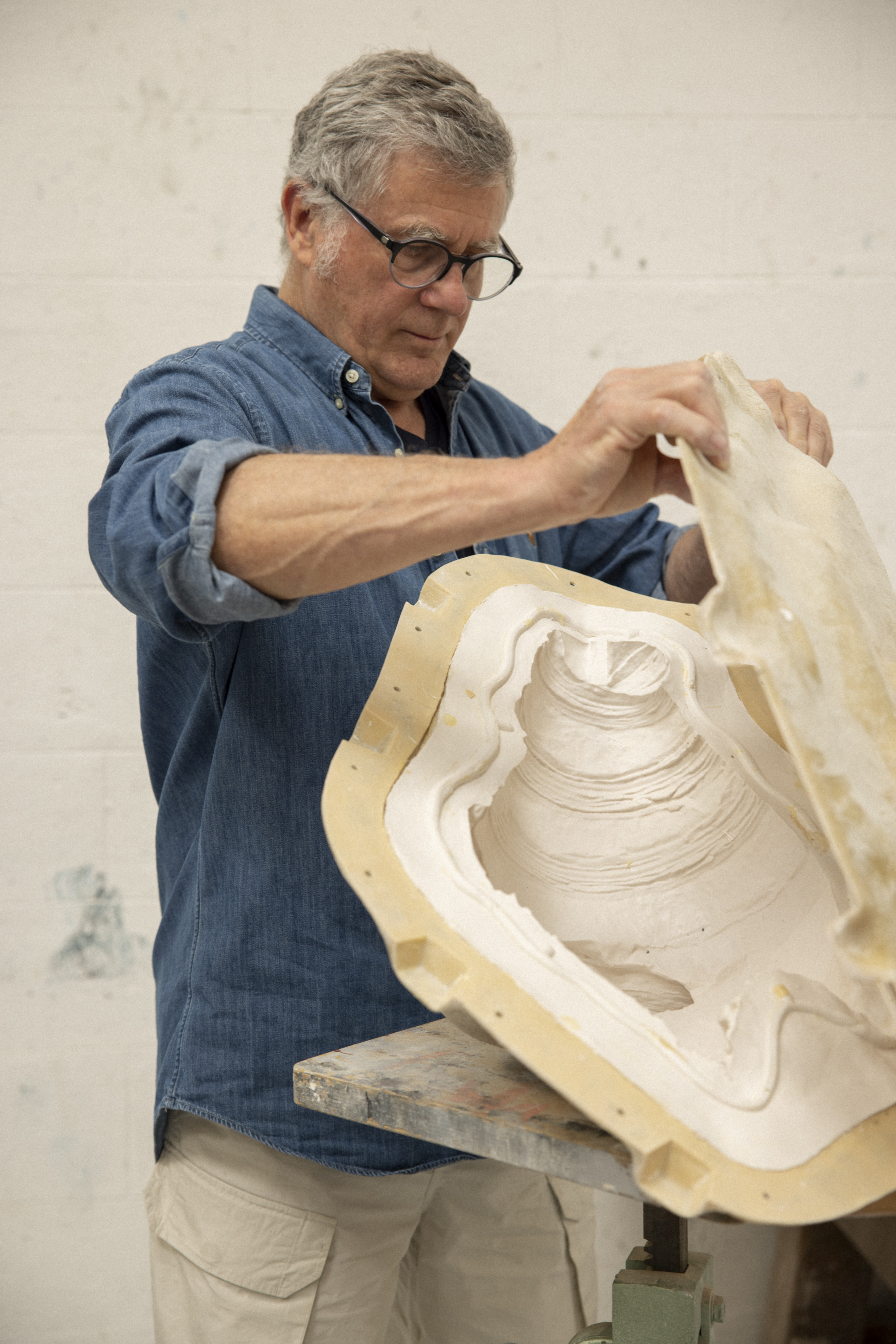
Eric : The original idea was to bring aesthetics back to that forgotten space at the center of the table. We wanted to move beyond the traditional bouquet of flowers — without taking ourselves too seriously. So we created sculptural objects for the table inspired by French gastronomy. These pieces, entirely made in France in our ateliers in Évry-Courcouronnes, are not necessarily functional. They are not meant to be “useful.” They exist to bring art back to the table and to spark conversation.
At its core, it’s an artistic approach intended to remind us that a meal is, above all, a moment of pleasure— a moment that brings people together around a table.
What’s the last crazy idea that actually paid off?
Eric : Deciding to turn a gold-leaf chicken into a luxury object! (Laughs)
Colin : Both of us leaving our jobs to become business partners —father and son — and starting a whole new entrepreneurial adventure together. Everyone tried to discourage us. In the end, we probably should have done it earlier. (Smiles)
If Ferdie were a menu?
Eric : It would obviously be the entire Banquet collection! Oysters, saucisson, bread, soft-boiled eggs, chicken, camembert, walnuts… It sounds more like a picnic, actually. (Laughs) Can croissants count as dessert?
Speaking of menus — what dish could get you out of bed in the middle of the night?
Colin : Lasagna! I think it’s probably the favorite dish of the whole family. It’s also my father’s specialty. My mother cooked every day, but whenever my father took over, it was always either lasagna or curry — generous family-style dishes made to be placed in the middle of the table and shared. As for me, anything involving melted cheese is basically impossible to resist.(Laughs)
Do you have a favorite “bad taste” or guilty pleasure?
Colin : My favorite guilty pleasure… I have to admit, it’s Belin snacks. You know those very artificial little French aperitif crackers with a processed Emmental flavor? They’re addictive. If there’s an open bag around, I completely lose all dignity. (Laughs)
Eric : I won’t lie, I do enjoy a hamburger from time to time. And when I was younger, I used to love Caprice des Dieux cheese.
The ultimate table faux pas?
Together : Saying “Bon appétit”! And helping yourself to more food before everyone else at the table has finished eating.
If you could keep only one table accessory, what would it be?
Colin : An egg topper for soft-boiled eggs! You know — that funny little metal cone with a ball you pull up and release, which cuts a perfectly clean circle into the shell. Of course, I could just use a knife, but with this thing it’s neat, quick, satisfying, fun to use — and everybody’s happy. I should mention that I’m obsessed with soft-boiled eggs. We eat them constantly at home!
Eric : That’s true, he really does. (Laughs) As for me, I have a soft spot for candlesticks and carafes — objects that dress the table. Although honestly, I could just as easily say a cutting board… indispensable, no? Even if that’s probably more of a tool than an accessory.
Colin, how would you describe your father? And Eric, a few words about Colin?
Colin: To me, Eric is first and foremost a father figure before being an artist. He embodies taste, elegance, refinement — and humility.
Eric : Colin is a true entrepreneur. A sharp, spirited musketeer. He has the energy and the boldness needed to move things forward.
What talent or skill do you wish you had?
Eric : I would have loved to possess the technique and precision of a pastry chef.
Colin : JI don’t have my father’s talent for drawing, and I wish Idid. Or simply, I’d love to know how to do wheelies on a motorcycle.

To conclude, how would you define Ferdie in just a few words?
Eric : Ferdie is, all at once, the desire to bring art back to the table, technological innovation, a touch of provocation, boldness, craftsmanship, a sophisticated play on scale — and the elevation of the ordinary.